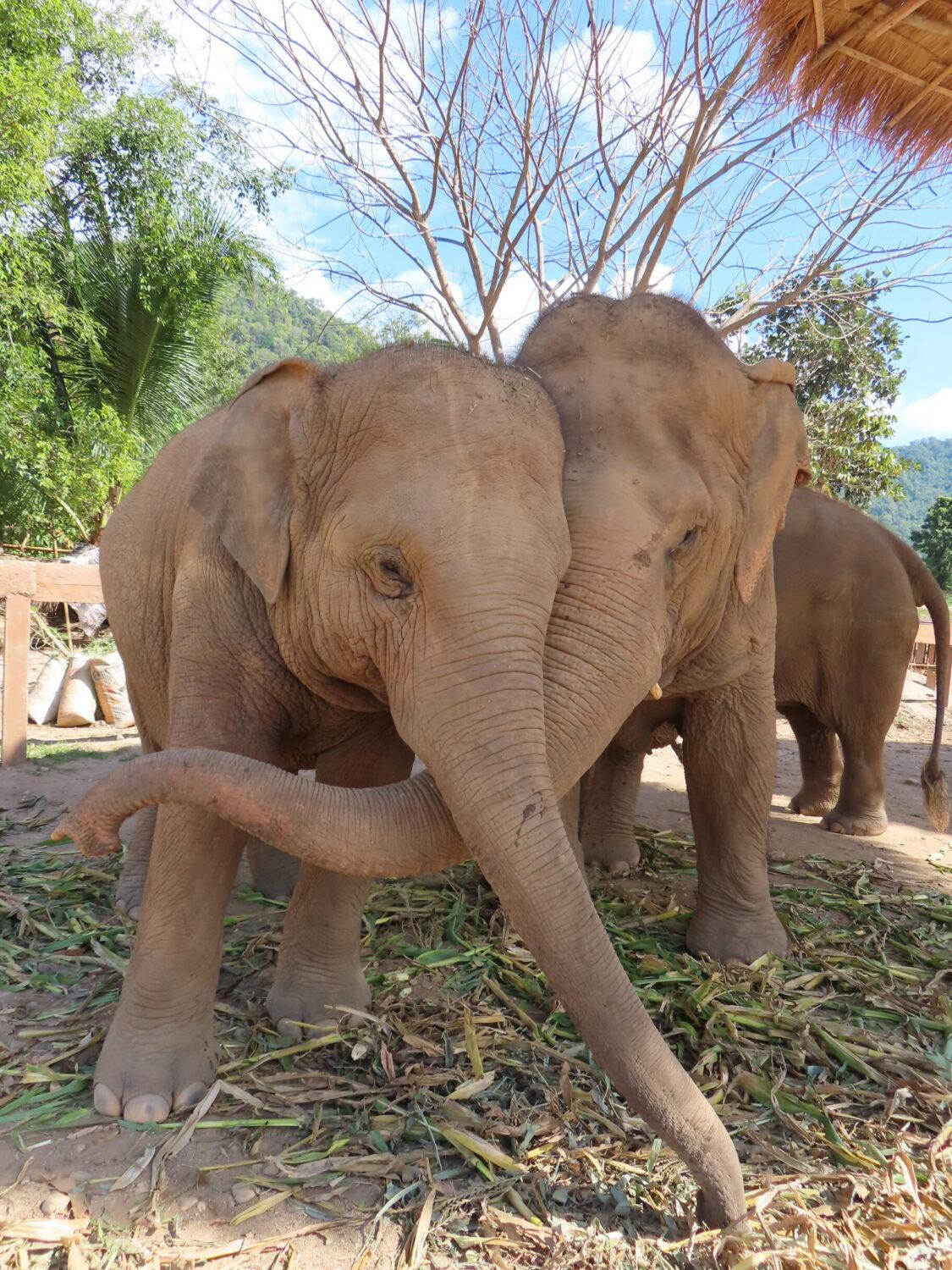
In Thailand, you’ll find many chances to see elephants up close. These intelligent, gentle giants have long fascinated travelers with their grace and deep emotional connections. But behind many elephant experiences lies a reality that is often hidden from tourists. As responsible travelers, it’s important to understand what truly ethical elephant tourism looks like, so you too can become an advocate for animal welfare on your next trip.
The Elephant Nature Park stands out as the top choice among the best sanctuaries for elephants in Chiang Mai. Keep on reading if you want to know what makes them different from many other sanctuaries you can find in the country and how to recognize a truly ethical elephant sanctuary.
This post may contain affiliate links which means we may receive a commission at no cost to you if you make a purchase through a link.
What makes an elephant sanctuary ethical?
An ethical sanctuary is a place where the natural behavior of elephants is respected and protected. They are not forced to perform, give rides or interact with humans in ways that causes them harm or stress.
Just because you’re not riding an elephant doesn’t mean the place you’re visiting is ethical. Some places still chain elephants at night or make them bathe with tourists every day. These things might look harmless on the surface, but they can be really stressful for the elephants.
From a local point of view, these practices don’t always seem wrong. In Thai culture, for example, riding an elephant can feel similar to riding a horse. It’s important to not start fingerpointing as many locals truly believe they’re caring for the animals.
However, it’s important to understand that while the intention may not be cruel, the reality is that elephants are wild animals, not domesticated like horses. The training methods used to prepare elephants for tourist interaction often involves physical and emotional mistreatment when they are young.
An ethical elephant sanctuary stands in stark contrast to the practices mentioned below:
Elephant bathing
While bathing with elephants in Thailand might seem appealing to your Instagram profile, ethical sanctuaries refrain from this practice. They recognize that elephants are capable of bathing themselves without human interference.
Still, many of the so-called elephant sanctuaries in Chiang Mai, prioritize the thrill of tourists over the well-being of the animals. They are led to the river for bathing every day, and sometimes even forced into the water.
Elephants in chains
Tragically, a lot of elephant sanctuaries keep the elephants in chains during the night (if you see this during day times, then definitely stay away!). They taint the image of elephants as free animals, while being kept in cages or in chains during the night.
Seeing an elephant swaying their heads from left to right all the time? Maybe walking forth and back in the meanwhile like a dance? This behavior reveals a deeper mental health issue than you could imagine.
This is called stereotypic behavior and implies a big mental health concern in captive animals. It’s a repetitive behavior pattern without any function on its own and is shown when the animal is not capable of performing its natural behavior. It’s a coping mechanism for the stress and depression they are experiencing.
Elephant riding
Elephant riding involves a cruel and abusive process in which young elephants are separated from their mother and beaten up in order to stand still. Elephants are highly social creatures and their family bond is the most important aspect in their life.
If they don’t perform tourist riding, they are kept in chains under very stressful conditions which could cause them to break their legs. An elephants’ spine is also not made to carry humans and it can cause serious spinal injuries.
Riding an elephant causes immense physical and psychological harm to these intelligent creatures which is absolutely not worth the pleasure of a short elephant ride!
Close interaction with elephants
Ethical sanctuaries avoid encouraging close interactions with humans to prevent habituation, ensuring the elephants retain their natural instincts and behaviors as much as possible. The rehabilitation process of elephants is not at all an easy task.
Avoiding human-animal interaction as much as possible, reduces the risk of vulnerability to poachers and road accidents once they are reintegrated into their natural habitat. However, if an animal will stay at a sanctuary for the rest of its life, sometimes even in ethical sanctuaries they are used to some hand-feeding.
An example of happy elephants in Chiang Mai: the Elephant Nature Park
Now that you understand the principles of ethical wildlife tourism, let’s take a closer look at one of the most respected sanctuaries in Northern Thailand: the Elephant Nature Park, a true safe haven for elephants in Chiang Mai.
This sanctuary only takes in very badly and permanently injured elephants. That’s why you may see staff hand-feeding them since they need human habituation to be able to receive the extra care they need. There is no rehabilitation process in this sanctuary as these animals are simply too injured to ever be released in the wild again.
During a tour, with no more than 10 people per guide, you’ll get to hear their individual stories, like those who stepped on landmines or were overworked or simply too old for the logging industry.

After a first introduction to the elephants, lunch will be provided at the main entrance point and you can enjoy a completely freshly made vegan lunch with an unforgettable elephant view!
The Elephant Nature Park is huge, giving the elephants plenty of space to walk, explore, and enjoy their freedom. Each elephant has a dedicated caretaker who looks after them every day. These caretakers are always nearby to make sure the elephants stay happy and safe.
Sometimes, when female elephants get a little too playful or bother each other (although they are social animals, it’s not natural to live with that many elephants together), the caretakers gently guide them apart… with the help of a few bananas, of course!
There’s also a part of the park, over a big bridge that’s only for elephants who are new or still healing from past trauma. These elephants are not ready to be around crowds yet, so they stay in a peaceful area where no visitors are allowed.
What to know before visiting Elephant Nature Park
A daytrip with pick-up and drop-off at the Chiang Mai City center costs around 2600 baht per person and can be booked through a tour operator or one of the hotels you’re staying at.
You’ll also have the option to book directly at the Elephant Nature Park Office in Chiang Mai where you can choose the type of visit you’d like to do. Their ‘care for elephant’ tour package includes a visit to ENP and you get to prepare food for the elephants.
If you’re leaving from Chiang Mai, it’s a 1,5 hour ride to the park so departures are typically between 8:00 and 8:30 AM. If you prefer a more independent adventure, consider driving to the ENP on a scooter.
You can meet your group at the entrance of the park. Though you’d have to pay the same amount as you would if you went by bus, the unique experience is definitely worth it, as you’ll get the chance to explore the beautiful spots along the famous Mae Hong Son route!
Yes the ENP is not the cheapest option to see elephants, but being known as one of the most ethical sanctuaries in Thailand, it’s worth every penny!

Volunteering at the Elephant Nature Park
if your heart finds it challenging to bid farewell to the gentle giants after just one day, fear not! The Elephant Nature Park offers the opportunity to volunteer with elephants. By spending a week at the park, you’ll have the privilege of engaging in meaningful activities, such as preparing food for the elephants. These grey cuties consume a substantial amount of food every day! There are lodges right at the entrance of the park.

Other Conservation Projects at Elephant Nature Park
Elephant Nature Park doesn’t just care for elephants, they also help many other animals like cows, horses, dogs, and cats.
During the COVID-19 pandemic, when many farmers struggled to sell their crops, the sanctuary started a feeding bank. They bought food from local farmers to feed the elephants. This way, the elephants stayed healthy, and the farmers were supported during a very hard time.
ENP also helped local women who lost their jobs during the pandemic. They taught them how to make handmade bracelets, which are now sold in the park’s gift shop. Buying one of these bracelets is a great way to support both the elephants and the local community.
The park also works closely with the Save the Elephant Foundation, an organization that helps raise awareness about elephant welfare. They educate local people, like those in the logging or mining industries, on how treat the elephants better.
All of these efforts cost money, which is why visiting Elephant Nature Park might cost a little more than other elephant attractions in Chiang Mai. But your visit helps fund vital work and supports a truly ethical way to experience elephants in Chiang Mai.
You can learn even more about these projects when you visit the park. There are lots of info panels at the entrance, explaining how ENP’s work is making a difference for elephants in Chiang Mai and for the people who live and work alongside them.