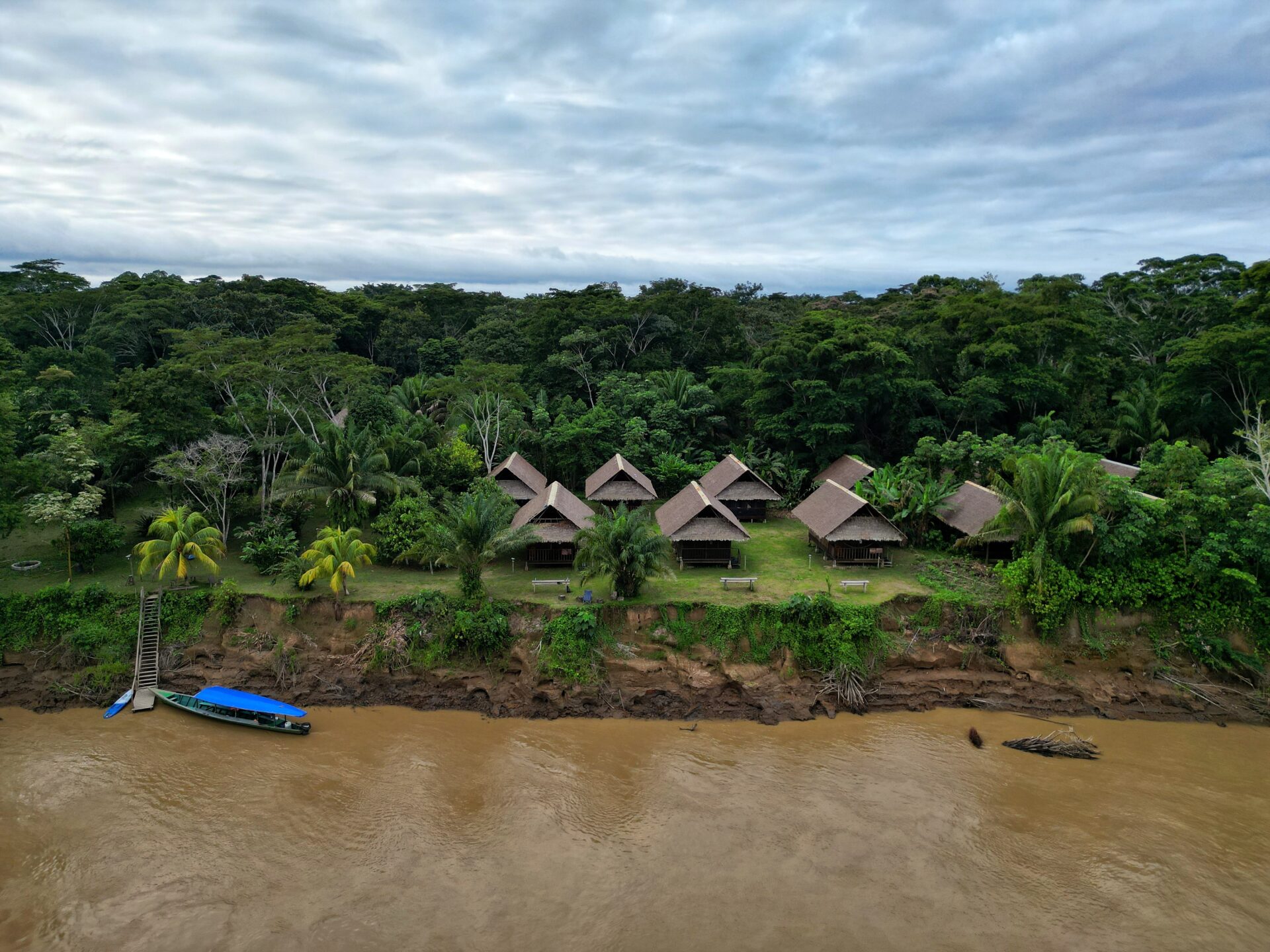
Puerto Maldonado is, at least for now, still a hidden gem in the heart of the Amazon rainforest. It’s perfect for adventurous travelers seeking authentic wildlife encounters.
Unlike more tourist-heavy destinations, this serene spot offers a raw and unspoiled experience, with vibrant jungle ecosystems and incredible biodiversity waiting around every corner!
Let us show you why Puerto Maldonado is well-worth a visit on your Peru itinerary!
This post may contain affiliate links which means we may receive a commission at no cost to you if you make a purchase through a link.
Iquitos or Puerto Maldonado
Iquitos is the gateway to the Amazon rainforest in northern Peru, meanwhile Puerto Maldonado lies close to the Bolivian border near the Cusco area. If you are doubting about which one you should visit, then there are three main points you should know that’s going to help in your decision.
1. Ethical wildlife tourism
In Iquitos, you will probably see more wildlife species than in Puerto Maldonado. But unfortunately, often not in the way you’d hope. Exotic animals like monkeys, parrots, snakes and caimans are frequently found caged in markets or served as meals.
The sad part is that this isn’t part of traditional Amazonian culture. Instead, it’s a response to tourist demand. Local people living in Iquitos realized that tourists were willing to pay to see, eat, and interact with exotic species.
This demand fueled unsustainable hunting practices, removing these animals from their natural habitats. This majorly disrupts the balance of the ecosystem.
Even seeing the pink river dolphins, the ultimate reason why many travelers choose to visit Iquitos, often comes with ethical concerns. Since sightings are very rare, tour operators may feed dolphins to lure them closer for tourists. This unnatural interaction disrupts their behavior and survival instincts.
In Puerto Maldonado, animal encounters feel more authentic and responsible. Here, local and native communities value and protect wildlife, maintaining a respectful relationship with the rainforest.
There are less local people living here which means they have a broader perspective on how to treat animals correctly. They also have more knowledge about ecotourism practices and why this is so important to preserve the Amazon Rainforest.
2. Accessibility and development
Reaching Iquitos requires a flight, as the city is not accessible by road. Once there, you’ll find a lively center worth exploring and a variety of tour possibilities in every price range.
Puerto Maldonado, on the other hand, is reachable by flight or bus. The town itself is quieter and less developed, serving only as a gateway for discovering the Amazon.
3. Amazon river cruise vs canoe trips
Iquitos offers river cruises along the Amazon River, the lifeblood of the rainforest. Its wide river allows potential dolphin sightings, but this often keeps you far from the wildlife-rich shores.
Puerto Maldonado tours take you along the Rio Madre de Dios, or the Tambopata river, both tributaries of the Amazon River. The narrower river allows closer encounters with wildlife, perfect for nature lovers seeking a more personal connection to the jungle.
How to get to Puerto Maldonado?
1. By Bus
Puerto Maldonado is easily accessible from Cusco by bus. After experiencing the wonders of Machu Picchu, you can take a 9-hour bus journey to the gateway of the Amazon: Puerto Maldonado. The two main operators, Civa and Cruz del Sur, both offer reliable services though we’re a slightly bigger fan of Civa.
Both have options to recline your seats 180-degrees, but Civa has a more private pod experience. Buy the slightly pricier ‘Exclusive’ (not Superciva tickets) tickets which are around €30 for 180 degree reclining seats. Your body will thank you!
2. By Flight
Direct flights connect Puerto Maldonado with Lima and Cusco. Though convenient, flights are notably expensive, often costing about €150 for a one-hour trip. We opted for a more sustainable and budget-friendly bus ride to Puerto Maldonado and flew back to Lima via Latam airlines.
Best time to visit the Amazon in Peru
The weather in Puerto Maldonado, like much of the Amazon, is consistently warm and humid year-round. Whether it’s the dry or wet season, temperatures typically range between 25–30°C, ensuring a tropical experience no matter when you visit. Expect humidity and the occasional refreshing rain shower, even during the dry season months!
Dry Season (May to October):
This is the ideal time for jungle hikes, as trails are more accessible and wildlife often gathers at the shores to drink, making it easier to spot them. Another highlight is the crystal-clear night skies, offering breathtaking views of the Milky Way. If you’re visiting in May or June, you’ll enjoy tours with fewer tourists compared to the summer months.
Wet Season (November to April):
During this time, the rivers swell, making it easier to navigate deeper into the rainforest by canoe. The higher water levels also increase your chances of spotting wildlife that usually stays hidden deeper in the jungle. However, with this beauty comes a challenge: mosquitoes are at their peak, so come prepared!
 Check out our Amazon rainforest packing list to help you prepare for your adventure!
Puerto Maldonado amazon tours
If you’re planning a visit to Puerto Maldonado, you’ll find two main areas to explore the Amazon Rainforest: Madre de Dios and Tambopata River.
Madre de Dios
This river is closest to Puerto Maldonado’s town center, making it the perfect choice for travelers with limited time (2–3 days) or those on a budget. Despite its proximity, the jungle experience here is truly amazing.
Tambopata river
For those willing to travel deeper into the Amazon, the Tambopata National Reserve offers amazing educational amazon tours. Staying at the Tambopata Research Center is more than just a visit; it’s a chance to support ecotourism and science. You can join researchers in exploring new species.
Without a doubt, the Tambopata National Park will be amazing. But it’s also not for every traveler’s budget. And since our niche is to show budget backpackers how you can still travel sustainably, we will show you that the Madre de Dios, just at the border of the national park, is also a great spot for experiencing the jungle.
Want to find eco-friendly amazon tours? Understand the basics of sustainable tourism first to find the best eco-deals!
Lodges in Puerto Maldonado
The cost of an Amazon tour largely depends on two factors: the duration of your stay and the type of accommodation you choose. Local tour operators generally offer similar activities, so the main difference in price comes down to the level of comfort in your lodge.
Consider staying at an eco-lodge or with a local family.It’s only a few days you’d miss some comfort but it makes it an even bigger adventure!
In remote eco-lodges, you can expect limited amenities: no hot water, and very basic meals like rice and just a few hours of electricity daily. So don’t forget to bring some extra snacks and a flashlight.
Wondering what to bring to the Amazon? Download our Amazon rainforest packing list so you’re fully prepared!
Things to do in Puerto Maldonado, Madre de Dios
1. Canoe trip
While paddling on the Madre de Dios River, you will hear the symphony of chirping birds, rustling leaves, and an occasional splash in the water from piranhas and cayman.
Exploring the Amazon by a canoe offers a chance to observe countless bird species up close in the trees. This activity is a perfect way to feel deeply connected to the Amazon.
2. Canopy walk
Walking high above the Amazon on a canopy bridge is an experience you won’t forget. Even if you don’t spot wildlife up close at treetop level, the sense of being surrounded by nature is simply unforgettable. That said, keep your eyes open though! Sometimes you might see monkeys swinging through the branches right next to you!
Safety tip: watch where you place your hands! Bullet ants hang around tree branches, and their sting is known to be the most painful insect sting in the world.

3. Night safari
Whether with a guide or exploring around your cabin, the jungle transforms when it’s dark. You’ll have the chance to spot snakes, tarantulas, and even monkeys settling down in the trees. While I have my reservations about spiders (yes, I mean the giant tarantulas!), seeing them in their natural habitat is fascinating (from a big distance though!)


4. Taricaya rescue center
The Taricaya Rescue Center is nestled along the shores of the Madre de Dios and is a wildlife rehabilitation and conservation center. This sanctuary serves as a haven for animals rescued from the Amazon, providing rehabilitation for some and a permanent home for those unable to return to the wild.
A highlight of their work is protecting Taricaya turtles, an endangered turtle species. In order to safeguard turtle eggs from indigenous people who eat them, they take the eggs to monitor and let them hatch in a safe environment. The center is open for a visit, but you could also do a voluntary placement there!

5. Caiman spotting
A night canoe safari gives you the thrilling chance to spot caimans along the riverbanks! In the darkness, their eyes reflect if you’re holding the flashlight at the right angle. Hold your flashlight right next to your own eyes if you want to search for them.
Did you know? You will most likely see white or black caimans. The black caiman, the largest of the Amazon’s 6 alligator species, can be upto 4 meters when they are adults!
6. Monkey island
Monkey Island, now a luckily limited, tourist attraction, began as one of the Amazon’s earliest rewilding initiatives. Over 25 years ago, monkeys rescued from circuses and zoos were brought here to regain their wild instincts.
Sadly, without government support back then, the project was abandoned. The monkeys stayed on the island and learned their new generations also to be in proximity of humans.
Only accessible with a guide, visitors can feed the monkeys as they are still habituated to human interaction. However, the monkeys remain free to forage naturally so you’ll have a chance of not seeing any at all.

7. Brazil nut trail
I must admit this was the excursion I was the least interested in at first. But a walk through the Brazil nut forest is a very unique experience! The Brazilian nut is the hardest nut in the world to crack, only a specific rodent, called the red rumped agoutis, can open it in the Amazon.
Locals have to use machetes a bunch of times before the nut cracks. Within the nut, there are on average 20 nuts and they have a very creamy taste and texture.
The best place where you can go for a visit is the Posada Amazonas lodge. This lodge is owned by the Esa Eje native community. Together with a western company ‘rainforest expeditions’ they form an alliance.
Natives earn a fulltime income meanwhile the eco tourism company takes care of the marketing and management side of things. This is an inspiring example to showcase sustainable tourism can truly create good outcomes for local people!


8. Sandoval lake
What you absolutely cannot miss in Puerto Maldonado is Sandoval Lake. The oxbow lake lies within the Tambopata National Reserve and boasts a family of river otters. You’ll more likely get to see them during the wet season when you can get deeper into the lake.
You’ll start your Sandoval trip with a small hike on a wooden pathway where you’ll see or at least hear capuccin and howler monkeys. After that, you get into a small canoe with which you can visit the lake. This was one of my favorite activities since you really had the feeling to come super close to the animals.

9. Yacumama lake
Yacumama Lake, just outside Puerto Maldonado city center, is a dreamy spot worth visiting. While some tours advertise piranha fishing here, this activity isn’t ethical. The fish are small, and you’re unlikely to catch anything you can eat. Removing and harming wildlife from their environment purely for entertainment harms the delicate balance of this ecosystem.
Instead, enjoy the lake which is truly magical. You’ll be in a canoe surrounded by caimans, birds, and dreamy trees rising from the water. Go at sunset for an unforgettable show as hundreds of macaws and other birds fly overhead, returning to their nests. It feels like stepping into the disney animation movie of Rio!
10. Macaw clay lick
For bird enthusiasts, Peru is mostly known for its condors and its macaw clay licks, a fascinating wildlife experience you can’t miss. To see this beautiful scene, you’ll need an early start, as the macaws visit only in the early morning.
But why do they eat clay you might think? They eat fruits with seeds and everything. The clay neutralizes the toxins of the seed they consume, keeping them healthy. On top of that, a clay lick is also a social hub where macaws find friends and potential mates.

11. Amazon Shelter volunteering for a day
Puerto Maldonado is home to three wildlife rehabilitation centers, each with its own focus. Two centers focus on large predators like jaguars and are not open to the public as rehabilitation is more challenging with big cats.
The third one is the Amazon Shelter which welcomes visitors and concentrates on rehabilitating monkeys as they are vulnerable to poachers and electrocution from power lines.
Want to make an impact? For only €40 a day, you can spend a day volunteering at the shelter.
12. Visit a native family
When exploring the Amazon, it’s important to first know the difference between native families and indigenous tribes.
Native families are semi-modernized communities often involved in ecotourism. Tour operators collaborate with them to offer cultural insights, showcasing how they hunt, cook, and craft textiles. While their children attend town schools and wear modern clothing, they choose to maintain their traditional lifestyle in the jungle after school hours.
Indigenous tribes live completely off grid, relying on scavenging and hunting. Tribes occasionally plunder native villages for resources and kill them.
A drone monitoring program has been established to track tribal movements. The families get a warning to evacuate and abandon their homes to avoid confrontations. Upon returning, families often find their homes damaged and must completely rebuild it.

Now you know everything to explore the amazon in Puerto Maldonado. Have a great time!